Cancer treatment in Japan
Why patients choose Japan for cancer immunotherapy
Japanese clinics treat cancer with immune cells grown from the patient's own blood, under a national law in force since 2014 that reviews every treatment plan. In most other countries, these treatments are given only in clinical trials. Japan was also the first country to approve several other cancer treatments. Tell us about the diagnosis, and we will find a clinic in Japan that can review your case.
2 minutes: contact and diagnosis. Documents later, if needed.
No obligation. Your own doctors stay in charge of your care.
A question first? Message us on WhatsApp- Case preparation and clinic matching are free
- We reply within 1–2 business days
- Medical interpreter at the consultation
Immune cell treatments in Japanese clinics
About 1,000 treatment plans that use immune cells are filed with Japan's Ministry of Health (June 2026). The clinic takes a blood sample, grows the cells in a registered laboratory for about two weeks, and gives them back by drip or injection. Clinics use these treatments alongside surgery, chemotherapy or radiotherapy, not instead of them.

NK cell and gamma-delta T cell treatment
Used for: Many solid tumours, during or after standard treatment
These immune cells can attack cancer cells without first learning a cancer marker. Clinics grow them from a blood sample and state the number in each drip, usually between 1 and 10 billion cells. A course is often 6 to 12 drips, one every 2 weeks.
Outside Japan: Korea had approved one paid treatment plan under its new law by October 2026. China allows them only in research, outside pilot zones. In most other countries, clinical trials only.
Ask about your case for free (opens in a new tab)
Activated T cell treatment
Used for: Many solid tumours, during or after standard treatment
T cells from a blood sample are activated and multiplied in the laboratory, usually to several billion, and given back by drip every 2 weeks.
Outside Japan: Korea approved one product of this kind in 2007, only for use after liver cancer surgery. China allows them only in research, outside pilot zones. Elsewhere, mostly clinical trials.
Ask about your case for free (opens in a new tab)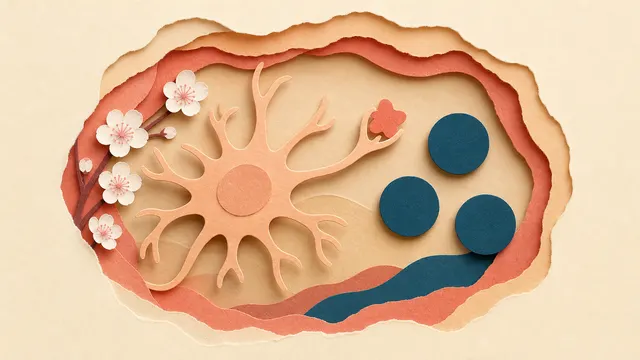
Dendritic cell vaccine
Used for: Many solid tumours, made with a cancer marker such as WT1 or with the patient's own tumour tissue
Dendritic cells show other immune cells what to attack. They are grown from a blood sample, loaded with the marker or tumour tissue, and injected under the skin near lymph nodes, usually 5 to 6 times, every 2 weeks.
Outside Japan: Korea approved one product in 2007, for advanced kidney cancer only. China allows them only in research, outside pilot zones. Germany has a few licensed laboratories.
Ask about your case for free (opens in a new tab)These treatments are not approved as medicines, and insurance does not cover them. The evidence differs between treatments and cancers, and some were studied only in small groups of patients. Cell counts and preparation also differ from clinic to clinic: we ask the clinic for them, and the doctor explains what is known about the benefit, the risks and the cost before you decide.
Cancer treatments Japan approved first
Japan was the first country to approve three of these treatments, and no other country has approved them yet. The fourth is used in several countries, but Japan has the most centres.
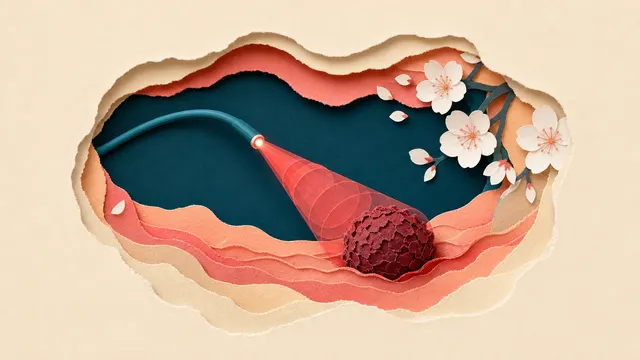
Photoimmunotherapy
Approved for: Head and neck cancer that has come back or cannot be removed by surgery
A drug that binds to cancer cells is given into a vein. The next day, the doctor shines red laser light on the tumour, and the light activates the drug in that area. Approved in Japan in 2020 and used in about 200 hospitals.
Outside Japan: Not yet approved in any other country.
Ask about your case for free (opens in a new tab)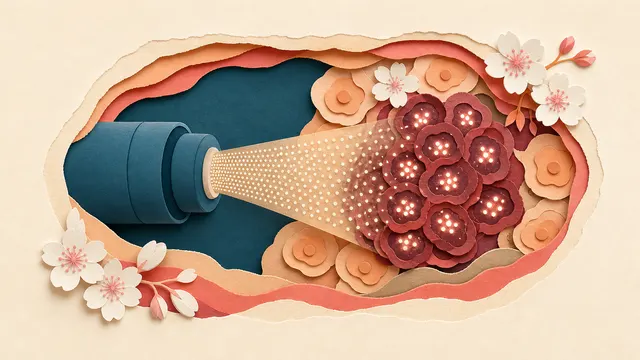
Boron neutron capture therapy (BNCT)
Approved for: Head and neck cancer that has come back or cannot be removed by surgery
A boron drug collects in the cancer cells. A neutron beam then makes the boron release radiation inside those cells, over a very short distance. Treatment is usually a single session. Approved in Japan in 2020.
Outside Japan: Since 2026 also at one hospital in China's Hainan medical pilot zone, under a special permit. Elsewhere only in clinical trials.
Ask about your case for free (opens in a new tab)
Oncolytic virus therapy for brain tumours
Approved for: Malignant glioma, including glioblastoma
A modified herpes virus that multiplies in tumour cells is injected into the tumour, in several sessions. Approved in Japan in 2021 with conditional, time-limited approval: more data must confirm it.
Outside Japan: Not approved in any other country.
Ask about your case for free (opens in a new tab)
Carbon-ion radiotherapy
Approved for: Some sarcomas and cancers of the pancreas, liver, prostate, and head and neck
Carbon ions are heavier than protons and release most of their energy at a set depth, in the tumour. Japan has used them since 1994 and has 7 of the world's 17 centres.
Outside Japan: Also in China, Germany, Italy, Austria and Korea, at fewer centres.
Ask about your case for free (opens in a new tab)Each treatment is approved only for specific cancers and stages, so most people who contact us will not qualify for them. In the free case review, the doctor checks whether any of them fits your case. Each hospital decides whether it accepts patients from abroad, and patients from abroad pay the full price.
More reasons patients choose Japan
Cells prepared where you are treated
Japan has more than 3,600 laboratories licensed or registered to prepare cells for treatment (December 2025), many of them inside clinics. Your blood is often collected, processed and given back in the same building.
Ask about your case for free (opens in a new tab)A doctor reviews your case before you travel
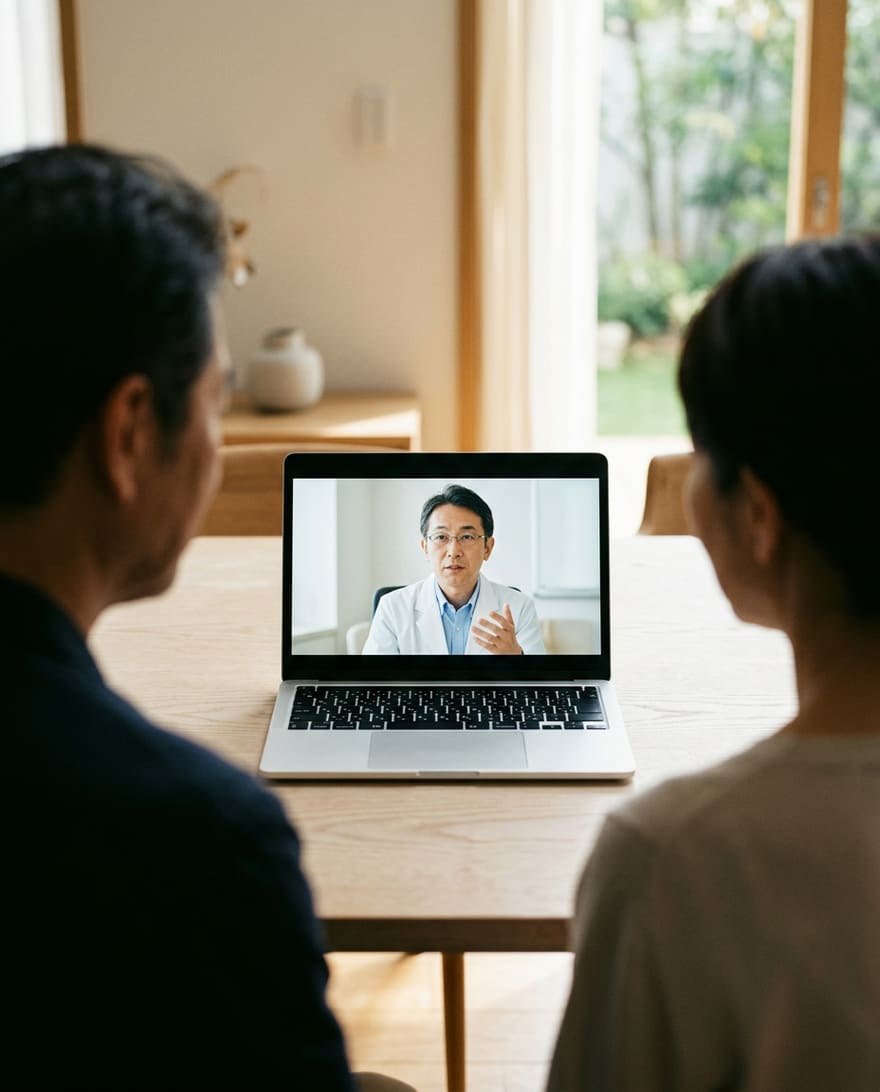
A specialist reads your translated records and talks with you by video, with a medical interpreter. You decide about a trip only after that conversation.
Ask about your case for free (opens in a new tab)Well-equipped imaging
Japan has one of the highest numbers of CT and MRI scanners per person in the OECD. Bring your scans as DICOM files: the doctor reads them directly.
Ask about your case for free (opens in a new tab)Costs you see in stages
Preparing your case is free. You see the consultation fee before you book and a treatment estimate before you decide, with no obligation at any step.
Ask about your case for free (opens in a new tab)Support in your language
We translate your records, arrange a medical interpreter for the consultation and appointments, and help with visa documents, accommodation and support during the stay.
Ask about your case for free (opens in a new tab)A calm place for a long stay
In the Safe Cities Index 2021, Tokyo ranked first of 60 cities for health security and fifth overall. Japan is a short flight from much of Asia, so some patients fly home between treatment cycles.
Ask about your case for free (opens in a new tab)How Japan oversees advanced treatments and clinics
Clinics in Japan follow rules set in national law, not only professional guidelines. These are the rules that matter most when you compare countries.

Each treatment plan is reviewed and filed
Before a clinic offers an advanced treatment outside a clinical trial, a committee certified by the Ministry of Health reviews the plan, and the plan is filed with the Ministry. Offering such a treatment without a filed plan is an offence. A 2024 amendment lets the Ministry inspect the committees and withdraw their certification.
Prepared only in licensed facilities
Material for these treatments may be prepared only in facilities licensed by, or registered with, the Ministry. The clinic must keep a record of every treatment it gives.
Side effects are reported, and treatment can be stopped
Clinics must report suspected serious side effects to the Ministry and send it a report on each treatment plan every year. The Ministry can inspect a clinic and order it to stop a treatment at once.
Hospitals are inspected every year
Under the Medical Care Act, health authorities inspect every hospital on site, as a rule once a year. Since 2015, every hospital and clinic must report an unexpected death related to care to a national centre and investigate its cause.
Honest advertising is required by law
Japanese clinics may not use patient testimonials or claims such as “the best” in their advertising. A clinic website that describes a private treatment must state its usual cost, its main risks and side effects, and whether the drug is approved in Japan.
Korea and China started more recently
Japan has run this system since 2014. Korea allowed paid treatment under a similar law in 2025 and had approved one treatment plan by October 2026. In mainland China outside pilot zones, hospitals may charge for such treatments only since May 2026, after national approval.
These rules control how treatments are offered and monitored. They do not show that a treatment will work for you: ask the doctor about the evidence for your case.
Sources: Japan's Act on the Safety of Regenerative Medicine (2014, amended 2024), Medical Care Act and Ministry of Health advertising guidelines; Korea's Ministry of Health and Welfare (October 2026); China's State Council Order No. 818.
When Japan may not be the right choice
We would rather you know this before you send anything:
- Your current treatment is working, or a standard option is available at home: do not stop or delay it to travel.
- Treatment in Japan is private and paid by the patient. Treatment usually costs US$50,000–195,000, and insurance usually does not cover it.
- Some treatments need several weeks in Japan or more than one trip.
How it works
Ask us about your case
In a free 15-minute call or a WhatsApp chat, we answer your most pressing questions and help you see whether treatment in Japan could suit your case.
Message us on WhatsAppSend what you have
A short description of the diagnosis is enough to start. Records can stay in their original language.
Fill in the formWe prepare your file
We organise and translate the records and submit them to a specialist clinic that suits your case. The clinic decides whether it will review it.
Talk to the doctor
If the clinic takes your case forward, we book a video consultation at a time that suits you, with a medical interpreter.
From the first message to the trip usually takes 1–2 months: a clinic needs about 2 weeks to reply, and a medical visa at least 2 more. If you need treatment sooner, start it at home; a later stage can still take place in Japan.
2 minutes: contact and diagnosis. Documents later, if needed.
What it costs
- Free: preparing and translating your file, choosing a suitable clinic and submitting your case. No obligation.
- Paid separately: the video consultation with the doctor, billed by the clinic. You see the price before you book; the consultation (about an hour, with an interpreter) costs ¥110,000 and is credited toward treatment if you go ahead. Treatment options and costs are discussed after this consultation.
- If no clinic can help, or no doctor agrees to review your case, you pay nothing. If you go ahead with treatment, the consultation fee is credited toward it.
What we do — and what doctors do
- We are a coordination service: records, translation, scheduling, interpretation and travel.
- Diagnosis, eligibility and treatment decisions come only from licensed doctors at the clinic.
- A consultation does not guarantee that a clinic will accept your case, or any result.
Questions about choosing Japan
Why Japan rather than Korea, Turkey, Israel or Germany?
The right choice depends on your diagnosis and on what your own doctors advise. Japan stands out for immune cell treatment in private clinics, for cancer treatments it approved first, and for how closely the law oversees both:
- Immune cell treatment: Japanese clinics give NK cell, activated T cell and dendritic cell vaccine treatment outside clinical trials, under a national law in force since 2014. About 1,000 treatment plans that use immune cells are filed with the Ministry of Health, Labour and Welfare (June 2026). Korea had approved one paid treatment plan under its similar 2025 law by October 2026, mainland China allows these treatments only in research outside its pilot zones, and Germany has a few licensed dendritic cell laboratories. These treatments are not approved as medicines, insurance does not cover them, and the evidence differs between treatments and cancers.
- World-first approvals: Japan was the first country to approve photoimmunotherapy and boron neutron capture therapy (BNCT) for certain head and neck cancers, and an oncolytic virus therapy for malignant glioma. No other country has approved them yet; since 2026 one hospital in China's Hainan pilot zone uses BNCT under a special permit. Japan also has 7 of the world's 17 carbon-ion radiotherapy centres. Each treatment is approved only for specific cancers and stages.
- Oversight: under the Act on the Safety of Regenerative Medicine, a committee certified by the Ministry reviews every treatment plan before it is filed, cells are prepared only in licensed or registered laboratories, serious side effects must be reported, and the Ministry can stop a treatment at once. Hospitals are inspected on site, as a rule once a year.
- Review before travel: a Japanese doctor reads your translated records and talks with you by video, with a medical interpreter, before you decide on a trip.
- Costs in stages: preparing your case is free, and you see the consultation fee before you book and a treatment estimate before you decide.
- Diagnostics: Japan has one of the highest numbers of CT and MRI scanners per person in the OECD.
Japan is not the right choice for everyone. Treatment there is private and paid by the patient, and some treatments need several weeks or more than one trip. Do not stop or delay treatment that is working at home.
What unique regulatory framework allows clinics in Japan to offer advanced treatments such as immunotherapy for oncology and immunology cases?
Japan regulates advanced cell-based medicine through a dedicated legal framework, overseen by the Ministry of Health, Labour and Welfare and the PMDA. Pathways such as Advanced Medical Care (Senshin Iryo) and the Act on the Safety of Regenerative Medicine let licensed clinics offer certain therapies outside a clinical trial, under defined safeguards. That is why some approaches are routinely available in Japan while they are still trial-only elsewhere. It does not mean they are right for everyone — that is a separate question. Through our medical concierge services, we organise the health records and diagnostic history you provide and help connect you with authorised specialised clinics in Japan that can evaluate your situation. Whether any treatment is appropriate for you is for their doctors to decide.
How much does it cost?
Preparing your documents, selecting an appropriate medical institution, and submitting your case for review are free of charge. If an independent doctor agrees to take your case forward, you will be offered a paid remote video consultation with the doctor. The consultation fee is ¥110,000 for a video consultation of about an hour with a medical interpreter. This includes preliminary case analysis, interpretation and support during the consultation, a post-consultation treatment plan if one is proposed, and an estimated treatment cost. The exact amount and what it includes will be confirmed before you book. If you decide to proceed with the proposed treatment plan, the consultation fee will be credited toward the treatment cost. If we cannot find a medical institution that can assist you, or no doctor agrees to review your case, you pay nothing.
Do I need a medical visa?
If your country is on Japan's visa exemption list, you usually do not need a visa: a short-term visitor entry is generally enough if your stay fits within the permitted visa-free period. A longer stay may still require a medical visa. If your country is not on the list, you will need a medical visa for a visit that includes treatment procedures, and we will help you prepare the supporting documents. We do not give immigration legal advice, so please confirm your entry route with the nearest Japanese embassy or consulate before booking. General information is available from the Ministry of Foreign Affairs of Japan.
How long will I need to be in Japan?
There is no standard length. A visit may range from a short consultation or procedure to several weeks. A cell-based process may include screening, cell collection, laboratory preparation and later administrations, so it may require one longer stay or more than one trip. Use only the written schedule confirmed for your case before arranging travel.
Will there be an interpreter?
We can request and coordinate an interpreter for a consultation or visit when the institution allows it. We will confirm the language, format and any interpreter fee before the booking. An interpreter supports communication but does not give medical advice or make decisions for you.